
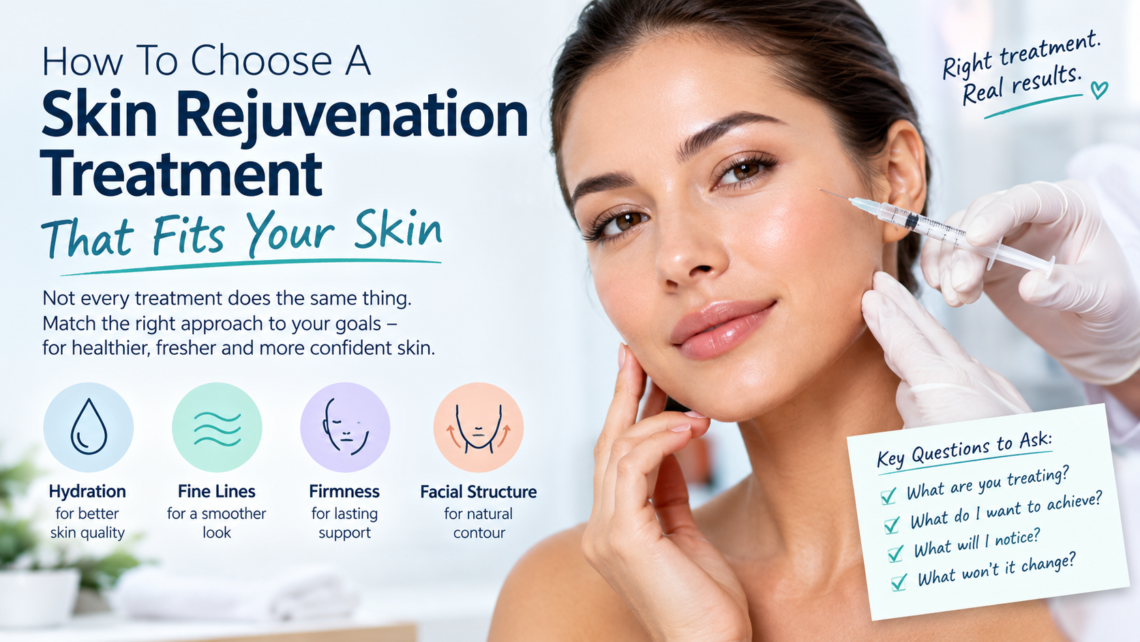
Good skin rejuvenation is not about finding the treatment with the longest list of benefits. It is about matching the treatment to what you actually want to change. Hydration, fine lines, firmness and facial structure can look similar in the mirror, but they do not always need the same approach.
This matters when you are comparing injectable skin treatments. If your main concern is improving skin quality while also considering subtle lifting, it helps to understand how different approaches work. For example, learning about profhilo in Singapore can give you useful context before you compare treatment goals, techniques and expected results.
Start With The Real Problem
The first mistake is choosing a treatment from a symptom rather than a goal. “My face looks tired” could mean dehydrated skin, early laxity, loss of volume or simply a change in facial proportions.
Try this simple test: describe the change you want without naming a treatment. “I want my skin to look fresher” is different from “I want my lower face to look more defined.” The first points towards skin quality. The second may require a conversation about lifting and facial structure.
That distinction can save you from paying for a treatment that solves the wrong problem.
Skin Quality Is Not Shape
Some treatments focus mainly on improving the condition of the skin. Others are designed to influence contour, firmness or specific signs of ageing. Those goals can overlap, but they are not interchangeable.
Think about a slightly crumpled shirt. Adding moisture may make the fabric feel better, but it will not necessarily change how the collar sits. Skin can behave in a similar way. Better hydration may improve texture and softness without creating the same visual effect as a treatment chosen specifically for laxity.
This is why “more hydrated” should not automatically be treated as “more lifted”.
The Five Point Question
When a treatment involves several injection points or areas of the face, the important question is not simply how many points are used. It is what each point is intended to achieve.
A useful consultation should explain the treatment map in practical terms:
- Which areas are being treated?
- Is the aim hydration, firmness or lifting?
- What change should you reasonably notice?
- What will the treatment not change?
The last question is often skipped. Yet it can be the most useful one.
If you expect a treatment aimed at skin quality to dramatically alter your jawline, disappointment is almost guaranteed. A clear boundary around the expected result makes the decision much easier.
Look Beyond The Treatment Name
Treatment names can make two very different approaches sound almost identical. That is where comparison shopping becomes tricky.
Instead of asking, “Which treatment is best?”, ask, “Which treatment is designed for my specific concern?” Then look at the technique, treatment area, number of sessions and recovery involved.
For example, imagine two people in their early forties. One notices dry-looking skin and fine lines but likes their facial shape. Another has reasonable skin texture but feels that the lower face has become less defined. Giving both people the same recommendation simply because they are the same age would miss the point.
Age is useful context. It is rarely enough to make the decision.
Watch For The Costly Mistake
One common mistake is stacking treatments too quickly because the first result seems incomplete.
Suppose someone wants fresher skin, books a skin-quality treatment, sees improvement in texture but still dislikes facial laxity, and immediately adds another procedure. The problem may not be that the first treatment “failed”. It may have done exactly what it was designed to do.
Give each treatment a clear job before combining approaches. Otherwise, you can end up spending more while still being unsure which change came from which treatment.
A better rule is simple: one main concern, one clear objective, then reassess.
Build A Better Treatment Plan
A useful consultation should feel more like problem-solving than shopping. Bring a short list of what bothers you, what you want to improve and what you do not want to change.
You can also ask how the recommended treatment fits into the bigger picture. If the goal is a fresher appearance, is the priority hydration? If the concern is early sagging, is the focus firmness or facial contour? If both matter, should they be addressed together or in stages?
There is no prize for choosing the most complicated plan. The better plan is the one where you understand what each step is meant to do.
The smartest way to approach skin rejuvenation is to start with the result you want, then work backwards to the treatment. Once you separate skin quality from facial shape and understand what each technique is designed to address, comparing options becomes much simpler. You may even find that the right choice is less about doing more and more about doing the right thing first.