
In today’s rapidly evolving digital landscape, new technological terms and frameworks emerge almost daily. Among these, YMYDZ55 stands out as a particularly intriguing and somewhat mysterious concept. At first glance, it may appear to be just a random string of characters. However, deeper exploration suggests that YMYDZ55 represents a broader idea tied to modern system architecture, automation, and advanced data integration.
As organizations increasingly rely on interconnected technologies, frameworks like YMYDZ55 are becoming essential. They reflect a shift toward smarter, more efficient, and scalable systems that can handle complex workflows with minimal friction. Understanding YMYDZ55 is not just about decoding a term—it’s about recognizing a growing movement in how technology systems are designed, integrated, and optimized.
What is YMYDZ55?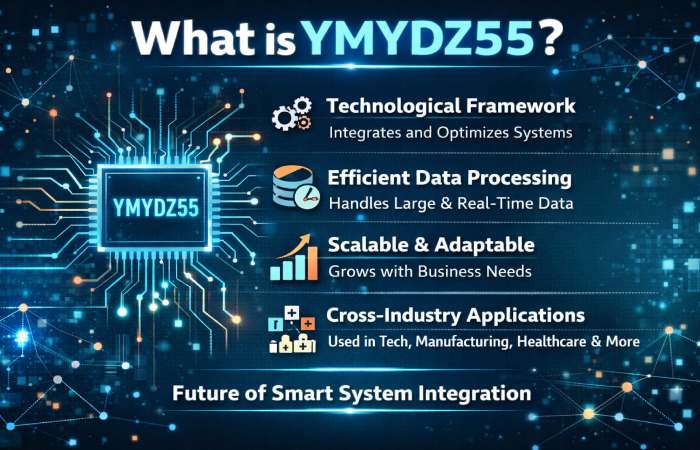
YMYDZ55 can be best understood as a conceptual technological framework or classification model that enhances the interaction between complex systems. Rather than being a single tool, software, or product, it represents an approach to designing and managing digital infrastructures.
At its core, YMYDZ55 focuses on improving how systems communicate, process data, and scale over time. It acts as a bridge between different technological components, ensuring they work together seamlessly instead of operating in isolated silos.
Core Concept Overview
| Aspect | Description |
| Definition | A flexible technological framework for system integration |
| Nature | Conceptual methodology, not a single product |
| Purpose | Improve communication between complex systems |
| Key Focus | Efficiency, scalability, automation |
| Use Case | Multi-system environments and data-driven platforms |
This approach allows developers and organizations to create adaptable ecosystems capable of evolving alongside technological advancements.
Origins and Development of YMYDZ55
The rise of YMYDZ55-like frameworks is closely tied to the rapid expansion of digital transformation initiatives across industries. During the early 2000s, businesses began facing challenges related to system fragmentation. Different software platforms, databases, and tools were often unable to communicate effectively.
As companies scaled their operations, the need for unified frameworks became increasingly apparent. This led to the development of integration-focused methodologies, eventually giving rise to conceptual models like YMYDZ55.
Over time, this concept evolved through contributions from multiple sectors, including software engineering, industrial automation, and healthcare technology. Each industry added new requirements, helping refine the framework into a more versatile and adaptable solution.
Evolution Timeline
| Period | Development Stage | Key Characteristics |
| Early 2000s | Initial Need | System integration challenges emerge |
| Mid 2000s | Experimental Frameworks | Early models for interoperability |
| 2010–2015 | Expansion Phase | Adoption in enterprise systems |
| 2015–2020 | Optimization | Focus on scalability and automation |
| 2020+ | Modern Evolution | Integration with AI, cloud, and IoT |
This gradual evolution highlights how YMYDZ55 is not a static concept but one that adapts to changing technological demands.
Key Features of YMYDZ55
The growing popularity of YMYDZ55 can be attributed to its powerful and practical features. These characteristics make it highly relevant in modern digital ecosystems.
Feature Breakdown
| Feature | Explanation | Impact |
| Adaptability | Works across various systems and environments | Flexible deployment |
| Data Processing | Handles large-scale, real-time data | Faster insights |
| Scalability | Expands with system growth | Long-term usability |
| Integration Simplicity | Easy to connect with existing systems | Reduced complexity |
| Security | Includes robust protection mechanisms | Safer operations |
One of the most important aspects of YMYDZ55 is its adaptability. Whether used in a small startup or a large enterprise, it can be customized to fit specific operational needs. This flexibility ensures that organizations are not locked into rigid systems.
Another defining feature is its ability to process large volumes of data efficiently. In a world driven by analytics and real-time decision-making, this capability is essential.
How YMYDZ55 Works
To understand how YMYDZ55 functions, imagine a digital environment where multiple systems—such as databases, applications, and analytics tools—must work together.
Without a unified framework, these systems often face communication barriers. Data may become inconsistent, workflows may slow down, and operational inefficiencies can arise.
YMYDZ55 addresses these challenges by creating a structured communication layer that standardizes interactions between systems.
Operational Components
| Component | Function |
| Communication Protocols | Standardize data exchange |
| Workflow Management | Automate processes |
| Data Processing Engine | Analyze and organize data |
| Integration Layer | Connect diverse platforms |
| Monitoring System | Ensure performance and reliability |
Through these components, YMYDZ55 transforms fragmented systems into a cohesive ecosystem. It ensures that data flows smoothly, processes are optimized, and systems remain compatible.
Applications of YMYDZ55 Across Industries
The versatility of YMYDZ55 allows it to be applied across a wide range of industries. Its ability to integrate systems and streamline operations makes it particularly valuable in environments that rely on complex workflows.
Industry Applications Overview
| Industry | Application | Benefits |
| Software Development | API integration, cloud systems | Scalable and maintainable systems |
| Manufacturing | Machine synchronization | Improved efficiency |
| Healthcare | Data processing, telemedicine | Faster diagnosis |
| Education | Learning platforms integration | Better digital learning |
| Business Analytics | ERP and CRM systems | Enhanced decision-making |
In software development, YMYDZ55 supports the creation of scalable architectures that can adapt to changing requirements. Developers can integrate multiple services without worrying about compatibility issues.
In manufacturing, it helps synchronize machines and sensors, ensuring that production lines operate efficiently. This leads to reduced downtime and increased productivity.
Healthcare systems benefit from faster data processing and improved integration between diagnostic tools and patient records. This can significantly enhance patient outcomes.
Benefits of Using YMYDZ55
Organizations that adopt frameworks like YMYDZ55 often experience transformative improvements in their operations.
Key Benefits Analysis
| Benefit | Description | Outcome |
| Efficiency | Automation reduces manual work | Faster operations |
| Data Insights | Real-time analytics | Better decisions |
| Cost Reduction | Optimized workflows | Lower expenses |
| Productivity | Seamless system interaction | Higher output |
| Future Readiness | Scalable architecture | Long-term growth |
One of the most significant advantages is improved efficiency. By automating communication between systems, organizations can eliminate redundant processes and reduce errors.
Additionally, real-time data insights allow businesses to respond quickly to market changes, giving them a competitive edge.
Challenges and Considerations
While YMYDZ55 offers many advantages, it is not without challenges. Implementing such frameworks requires careful planning and technical expertise.
Common Challenges
| Challenge | Explanation | Solution Approach |
| Complexity | Integration can be technically demanding | Skilled developers |
| Initial Cost | Setup may require investment | Long-term ROI focus |
| Training | Staff may need new skills | Continuous learning |
| Security Risks | Data integration increases exposure | Strong security protocols |
Organizations must ensure that they have the necessary resources and expertise to implement YMYDZ55 effectively. Proper planning and training are essential for maximizing its benefits.
The Future of YMYDZ55
The future of YMYDZ55 looks promising as technology continues to evolve. With the increasing adoption of automation, artificial intelligence, and cloud computing, the demand for integrated frameworks is expected to grow.
YMYDZ55 aligns perfectly with these trends, making it a valuable component of future digital ecosystems.
Future Trends and Impact
| Trend | Role of YMYDZ55 |
| Artificial Intelligence | Enhances data-driven decision-making |
| Cloud Computing | Enables scalable infrastructure |
| Internet of Things (IoT) | Connects devices and systems |
| Automation | Streamlines workflows |
| Big Data | Supports large-scale analytics |
As these technologies continue to expand, frameworks like YMYDZ55 will play a crucial role in ensuring seamless integration and efficient operation.
Conclusion
Although YMYDZ55 may initially appear to be a cryptic or abstract term, it represents a powerful and emerging concept in modern technology. At its essence, it reflects a shift toward smarter, more connected systems that prioritize efficiency, scalability, and seamless integration.
By enabling communication between complex systems, YMYDZ55 helps organizations overcome one of the biggest challenges of the digital age—fragmentation. Its adaptability allows it to be used across industries, from software development and healthcare to manufacturing and education.
As digital transformation continues to accelerate, the importance of frameworks like YMYDZ55 will only increase. Organizations that embrace such approaches will be better positioned to innovate, scale, and thrive in an increasingly interconnected world.